Views: 4
Some people buy candles to relax. Busy adults buy systems.
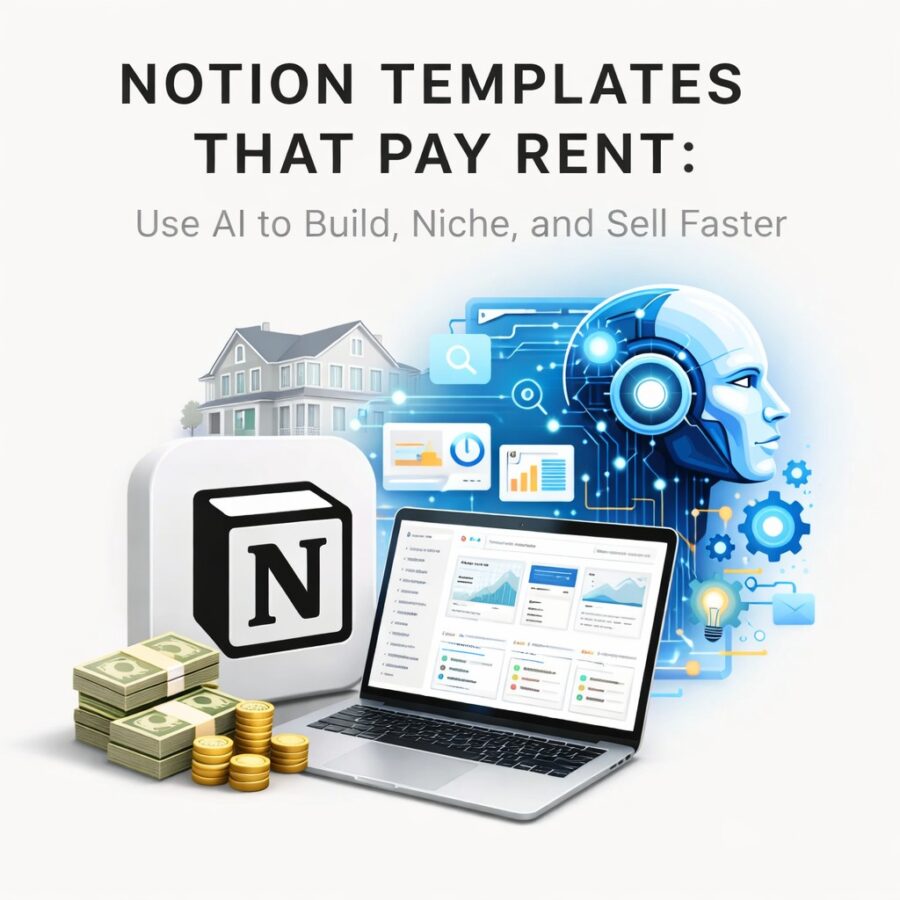
That is why Notion Templates That Pay Rent is not just a catchy title. It is a business model. You build a template that saves time, reduces forgetfulness, and turns chaos into “I know what to do next.” Then you sell it to people who would rather pay once than rebuild the same setup every Sunday night.
Notion makes this easier than most tools because a template can simply be a public Notion page that someone duplicates into their workspace. Notion’s own guide explains it plainly: any publicly shared page that can be duplicated counts as a template. (Notion) And Notion now has a Marketplace with a huge catalog, which signals demand from both buyers and creators. (Notion)
Your job is to stop thinking like a “template designer” and start thinking like a landlord of small wins. People keep paying rent for something that keeps working.
Why Notion Templates That Pay Rent are a real opportunity
Notion is not a niche tool anymore. It is an everyday workspace for students, creators, freelancers, and teams. That matters because more users equals more buyers who want shortcuts.
Notion actively encourages creators to publish and sell templates on its Marketplace. Their creator page even frames it as a side hustle path. (Notion) They also publish collections that highlight paid templates, which is basically Notion telling you, “People do pay for this.” (Notion)
Now layer AI on top. The goal is not to make a “smart” template. The goal is to build faster, test quicker, and niche with less guessing.
Notion also markets Notion AI as a way to create and edit docs, translate, and autofill databases with summaries and insights. (Notion) That gives you leverage when building templates that include documentation, quick-start guides, and tidy database content.
What makes a Notion template “pay rent” instead of “collect dust”
A template pays rent when it produces a weekly payoff. Not a someday payoff. A real, repeatable payoff.
Here are the traits that separate sellers from shelf-sitters:
It solves an expensive annoyance
Examples: missed follow-ups, unclear priorities, scattered client notes, content ideas stuck in ten places, invoices not tracked.
It has a single primary promise
One big win is better than ten small ones. A content system. A client tracker. A job search command center. A household budget that does not make you miserable.
It is easy in the first five minutes
If the buyer opens it and feels lost, you just bought yourself a refund request.
It includes instructions that do not insult the buyer
Adults want guidance. They just do not want to feel dumb.
It works without extra apps
Integrations are nice, but most buyers want a self-contained system first.
If you build around those rules, you stop competing on pretty icons and start competing on outcomes.
Affiliate Link
See our Affiliate Disclosure page for more details on what affiliate links do for our website.
Pick a niche that buys templates fast
Notion Templates That Pay Rent sell best when you aim at a specific kind of “busy.” Not generic productivity. Targeted pain.
Here are niche lanes that consistently buy:
Creators who publish weekly
They need idea capture, content planning, repurposing, sponsorship tracking, and deadlines.
Freelancers and small agencies
They need client intake, project status, deliverables, invoices, and meeting notes in one place.
Trade and service business owners
They need job scheduling, estimates, checklists, recurring maintenance logs, and customer follow-up.
Parents running a household
They need meal planning, chore rotations, calendars, budget tracking, and school info.
Job seekers who are serious
They need applications, networking, resume versions, interview prep, and follow-up reminders.
Students with heavy course loads
They need assignment tracking, reading notes, exam planning, and study routines.
A tight niche gives you two advantages. You know what to include, and your marketing becomes simple. People buy “for me” products.
Use AI to find what the niche keeps asking
Most template creators guess. You do not have to.
Start by harvesting the real questions your niche asks. Then your template becomes the answer.
Places to mine questions:
- Reddit communities for your niche
- Facebook groups where people ask the same thing daily
- YouTube comments under “how I stay organized” videos
- Google Business Profile Q&A for local service niches
- Your own inbox, if you already work with clients
AI helps you sort the mess.
Prompt: Act as a market researcher. I am building a Notion template for [NICHE]. Generate a list of 40 real-world problems they complain about weekly. Then turn those into 25 template features ranked by impact. Keep every feature simple and beginner-friendly.
That prompt helps you avoid the classic trap: building what you find interesting instead of what buyers will use.
Build the template skeleton first, not the fancy stuff
A Notion template is usually a dashboard plus a few linked databases. If you start with aesthetics, you will waste hours.
Start with structure:
- One Home dashboard
- One “inbox” for capture
- One core database (tasks, projects, clients, content, or jobs)
- Two supporting databases at most (notes, assets, invoices, routines)
Keep it lean. Notion’s own template guidance warns against overly complex setups that slow people down. (Notion)
Then define the weekly flow. Ask: “What does the user do on Monday, Wednesday, and Sunday?” If your template supports those moments, it becomes sticky.
A simple creator flow example:
- Capture ideas in the inbox
- Turn ideas into draft tasks
- Track publishing status
- Store links and performance notes
A simple service business flow example:
- New job request enters the jobs database
- Checklist drives each job stage
- Follow-up reminder fires after completion
- Notes are stored per customer
Build faster using Notion AI, but keep a human editor brain
Notion AI can speed up the annoying parts:
- Writing instructions
- Drafting sample entries
- Creating short summaries inside database properties
- Turning messy notes into clean text
Notion’s help center describes AI Autofill as a way to generate summaries, extract action items, and more using database properties. (Notion)
Use AI where it shines, then edit like a grown-up:
- Remove fluff
- Shorten sentences
- Make steps concrete
- Add examples
Prompt: I am creating the instructions page for a Notion template. Write a quick-start guide in 8 steps. Each step must be one short sentence. Add one example for each step. The user is a beginner who wants results in 10 minutes.
If you do this well, you reduce refunds and support messages.
Make it niche with three “signature pages”
A buyer should feel the niche in the first scroll. The easiest way is to build three pages that scream, “This was made for you.”
Examples for a freelancer template:
- Client Intake page
- Scope and Deliverables page
- Invoice and Payment tracker
Examples for a gym coach template:
- Client check-in dashboard
- Workout plan library
- Weekly progress tracker
Examples for a job seeker template:
- Application pipeline
- Interview prep kit
- Follow-up scheduler
These pages become marketing assets too. You can screenshot them, show them in a demo, and name them in your listing.
Affiliate Link
See our Affiliate Disclosure page for more details on what affiliate links do for our website.

Package it like a product, not a file
People pay more when the product feels complete.
Your packaging checklist:
- A clean Home dashboard
- A “Start Here” page with setup steps
- Sample data that teaches by example
- A reset button page (how to duplicate a clean copy)
- A version number and update notes
Notion explains how duplication works for public pages, which supports the “duplicate and go” buying experience. (Notion)
Also add a “Common fixes” section:
- “If your buttons do nothing, you might be in view-only mode.”
- “If you deleted a database property, here is how to restore it.”
- “If your dates look wrong, check your Notion timezone settings.”
That one page saves you hours.
Price with confidence and give buyers an easy choice
Pricing is not about what it took you to build. It is about what it saves the buyer.
Use a three-tier setup:
- Lite: one dashboard, one database, minimal extras
- Standard: full workflow system with helpful pages
- Pro: adds extra trackers, templates, and bonus pages
Notion Marketplace supports seller features like analytics and coupons, which gives you room to test pricing without guessing forever. (Notion)
A simple starting range:
- Lite: $9 to $19
- Standard: $29 to $59
- Pro: $79 to $149
If your template is truly niche and saves time weekly, higher prices can work. The key is clarity in the listing and proof in the screenshots.
Where to sell: Notion Marketplace plus one “outside” channel
If you want speed, sell where buyers already browse.
Notion Marketplace
Notion’s Marketplace has a massive selection of templates, and it includes paid creator collections and category browsing that can surface your work. (Notion) Notion also provides guidance for selling on Marketplace, including payments, refunds, analytics, coupons, and more. (Notion)
Gumroad
Gumroad has a Discover feature where people search for niche digital products, including Notion templates. (Gumroad)
Pick one outside channel at first. Do not scatter your attention across five platforms. One is enough until sales are steady.
Build a listing that sells without hype
A good listing reads like a calm promise.
Use this structure:
- One sentence outcome
- Who it is for
- What is inside (bullets)
- What problems it solves (bullets)
- Setup time (honest)
- Screenshots
- FAQ
Also, use the buyer’s language in the title and section headers. Not internal Notion language.
Example outcomes that work:
- “Plan a week of content in 15 minutes.”
- “Track clients, tasks, and invoices without losing your mind.”
- “Run your household on one dashboard.”
This is where Notion Templates That Pay Rent become real. Your listing needs to match what a stressed person wants to hear.
Affiliate Link
See our Affiliate Disclosure page for more details on what affiliate links do for our website.
Use AI to create niche marketing assets in one afternoon
Most template creators stop at “here is my template.” You will do more.
Use AI to generate:
- 10 short social hooks
- 5 email subject lines
- A one-page quick-start PDF
- A landing page draft
- A demo script for a short video
Prompt: You are a direct-response copywriter. I am selling a Notion template called [NAME] for [NICHE]. Write 10 social posts that each start with a different hook style. Keep each post under 60 words. End each with a simple call to action to view the template.
Then record a simple demo video. No cinematic drama needed. Show the dashboard. Show the flow. Show the result.
Sell faster by stacking small wins into bundles
A single template can pay rent. A bundle can buy groceries too.
Bundle ideas:
- Starter bundle for a niche (three templates)
- Template plus checklists
- Template plus a mini guide
- Template plus a “setup service” upsell
Notion Marketplace selling tools like coupons and analytics make bundling and testing easier. (Notion)
You can also create seasonal drops:
- “New Year reset version”
- “Tax season tracker”
- “Back-to-school dashboard”
- “Q1 planning kit”
Seasonal updates give you a reason to email your buyers and re-promote.
Avoid the mistakes that kill Notion template sales
Mistake one: building for everyone
A template for everyone is a template for no one.
Mistake two: too many pages
Complexity looks impressive, but it scares buyers. Notion itself warns that overly complex structures can hurt productivity. (Notion)
Mistake three: no examples
Sample data is not filler. It is training wheels.
Mistake four: vague promises
“Boost productivity” is a shrug. “Track client work and send invoices on time” is a yes.
Mistake five: no update plan
Buyers trust creators who maintain their products.
A simple 7-day plan to launch your first rent-paying template
Day 1: Pick a niche and outcome
One niche. One promise.
Day 2: Harvest questions and pain points
Turn them into features.
Day 3: Build the skeleton
Dashboard plus core database.
Day 4: Add signature pages
Make it feel niche.
Day 5: Write the Start Here guide
Short steps. Clear examples.
Day 6: Create listing and screenshots
Write a real FAQ.
Day 7: Launch with a demo and a coupon
Then collect feedback, fix friction, and update.
Notion gives clear instructions on how templates work, and how creators can list and sell in Marketplace, which supports this simple launch path. (Notion)
Closing: make the template earn its keep
Notion Templates That Pay Rent come from one mindset shift. You are not selling a dashboard. You are selling a calmer week.
When you use AI to speed up research, drafting, and documentation, you create faster. When you niche hard, buyers find you easier. When you package cleanly, people trust the purchase.
Build the first one. Ship it. Improve it. Then repeat with a second template for the same niche. That is how rent gets paid.